
Suzette Boon PhD is a clinical psychologist and psychotherapist specialized in the treatment of chronic traumatization and dissociative disorders.
She translated and validated the Dutch version of the Structured Clinical Interview for DSM-IV Dissociative Disorders (SCID-D) and received a PhD for her thesis "Multiple Personality Disorder in the Netherlands" in 1993.
She has developed a skills training manual for patients with a complex dissociative disorder: Coping with Trauma-Related Dissociation (Boon, Steele, & Van der Hart, 2011).
She is co-author of the book "Treating Trauma-Related Dissociation, A Practical, Integrative Approach" (Steele, Boon & Van der Hart, 2017) that won the Pierre Janet writing award of ISSTD in 2017.
Her latest book 'Assessing Trauma-Related Dissociation', published in 2023 includes a new diagnostic interview: the 'Trauma and Dissociation Symptoms Interview (TADS-I'). all books are translated in German,
Suzette is currently working in private practice and teaching mainly on chronic traumatization and dissociative disorders.
Suzette is co-founder of the European Society for Trauma and Dissociation (ESTD) and was the first president of this Society. She has received several awards from the ISSTD among which the lifetime achievement award for her contributions to diagnosis, treatment, research and education in the field of dissociative disorders.
Challenges in Assessing and Treating Dissociative Disorders
Wird verschoben auf 2027 - Onlineformat
Diagnostic questions
Does this patient suffer from dissociative amnesia, or are memory problems caused by episodes of absorption or concentration difficulties, or something else?
Are the voices psychotic, dissociative, or both?
How should identity problems be evaluated? Are they connected with (alternatively caused by) the existence of dissociative parts of the personality, or can they be explained as part of personality disorder pathology?
How can dissociative parts of the personality be distinguished from borderline modes or ego states?
Treatment questions
Once the diagnosis has been made, how should treatment be initiated?
Is phase-oriented treatment necessary, and if so, how long should it last?
How should patients with severe attachment problems be managed?
How should ongoing abuse be addressed?
How can therapist burnout, emotional overwhelm, or countertransference difficulties be prevented?
Day 1: Diagnostic focus
On Day 1, the focus is on diagnostic questions, introducing the Trauma and Dissociation Symptoms Interview (TADS-I). This interview differs from other semi-structured interviews in several ways:
It includes a section on other trauma-related symptoms in order to:
a) Develop a more complete clinical picture of possible comorbidity, including symptoms of PTSD and complex PTSD
b) Gain greater insight into the (possible) dissociative organization of the personality
c) Differentiate complex dissociative disorders from personality disorders and other conditions, such as (complex) PTSD, mood disorders, or psychotic disorders
Finally, the TADS-I aims to distinguish between:
Symptoms referring to a division of the personality
Symptoms involving other alterations of consciousness that are not necessarily dissociative
In a pilot study, the TADS-I was able to reliably differentiate DD patients from non-DD patients. Dissociative disorder (DD) patients differed significantly from non-DD patients in severity across all symptom profiles, including trauma-related symptoms and alterations of consciousness (Boon, Cavaletti & Boldrini, 2025).
Clinical examples and video clips will be used.
Day 2: Treatment focus
On Day 2, the focus is on major challenges in the treatment of complex dissociative disorders, such as:
Is a phase-oriented treatment model necessary, or can trauma memories be processed immediately?
Do we need a working alliance (and if so, with whom- which parts?)
What are the complications in patients with severe attachment problems?
How should ongoing abuse be addressed?
How can therapist burnout, emotional overload, or difficulties with countertransference be prevented?
References
Diagnosis:
Boon, S. (2023). Assessing Trauma-Related Dissociation with the Trauma and Dissociation Symptoms Interview. New York: W.W. Norton & Company.
German translation:
Boon, S. Die Diagnostik traumabedingter Dissoziation: Mit dem Trauma and Dissociation Symptoms Interview (TADS-I) arbeiten . Junfermann Verlag.
Boon-Langelaan, S., Cavaletti, M., Boldrini, M. P., & Runhaar, M. (2025). The Trauma and Dissociative Symptoms Interview (TADS-I): Results of a pilot study. European Journal of Trauma & Dissociation, 100611.
Treatment
Boon, S., Steele, K., & Van der Hart, O. (2013). Traumabedingte Dissoziation bewältigen - Ein Skills-Training für Klienten und ihre Therapeuten. Junfermann Verlag.
Steele, K., Boon, S., & Van der Hart, O. (2017). Die Behandlung traumabasierter Dissoziation - Eine praxisorientierte, integrative Vorgehensweise . G.P. Probst Verlag.
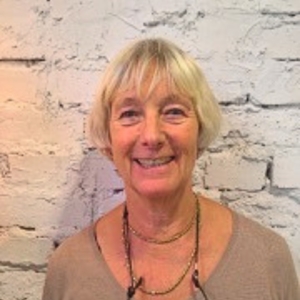
Ph. D. Suzette Boon

Dr. Susanne Leitz
Fachärztin für Psychiatrie und Psychotherapie
Termine
Fr, 06.11.2026, 09:30 – 17:30 Uhr
Sa, 07.11.2026, 09:30 – 17:00 Uhr
Sa, 07.11.2026, 09:30 – 17:00 Uhr
Gebühr: 485,00 €
Ermäßigte Gebühr für Mitglieder: 460,00 €
Zielgruppe
Fachleute, Interessierte
Weiterführende Informationen
Anmeldung
Für diese Veranstaltung werden Fortbildungspunkte beantragt.
Die Veranstaltung findet in englisch statt mit bedarfsorientierter Übersetzung.
Die Veranstaltung findet in englisch statt mit bedarfsorientierter Übersetzung.
Diese Veranstaltung wurde abgesagt.
GEFÖRDERT VON
– Landeshauptstadt München | Gesundheitsreferat
– Landkreis München
– Bezirk Oberbayern


